A Homeowner's Guide to Preventing Ice Dams and Leaks
June 18, 2025For homeowners and commercial property owners across Wayne, Oakland, Macomb, and Washtenaw Counties, the beauty of a snowy landscape can hide a serious threat: ice dams. These thick, icy ridges form at the edge of roofs, and if you’ve lived in Michigan for any length of time, you know they can lead to costly and damaging roof leak repairs.
At Above All Masonry & Construction, LLC., we've been helping our neighbors in the Downriver area—from Wyandotte to Taylor, Allen Park to Lincoln Park, Southgate to Trenton and Flat Rock—protect their most valuable assets for over 25 years.
We know the unique challenges that a Michigan winter presents, and we're here to help you understand how to protect your home or business.
The Michigan Freeze-Thaw Cycle
The root of the problem lies in our climate. Unlike places with consistently frigid temperatures, Michigan's winters are a volatile mix of heavy snowfall, bone-chilling cold, and dramatic temperature swings. It’s this constant freeze-thaw cycle that sets the stage for disaster.
Here’s how it works:
Heat Loss
Warm air from your home's living space rises and escapes into the attic. In a poorly insulated or ventilated attic, this warm air heats the underside of your roof.
Snowmelt
The warm roof surface melts the bottom layer of snow on your roof. This water flows down the roof, under the layer of snow.
Refreezing
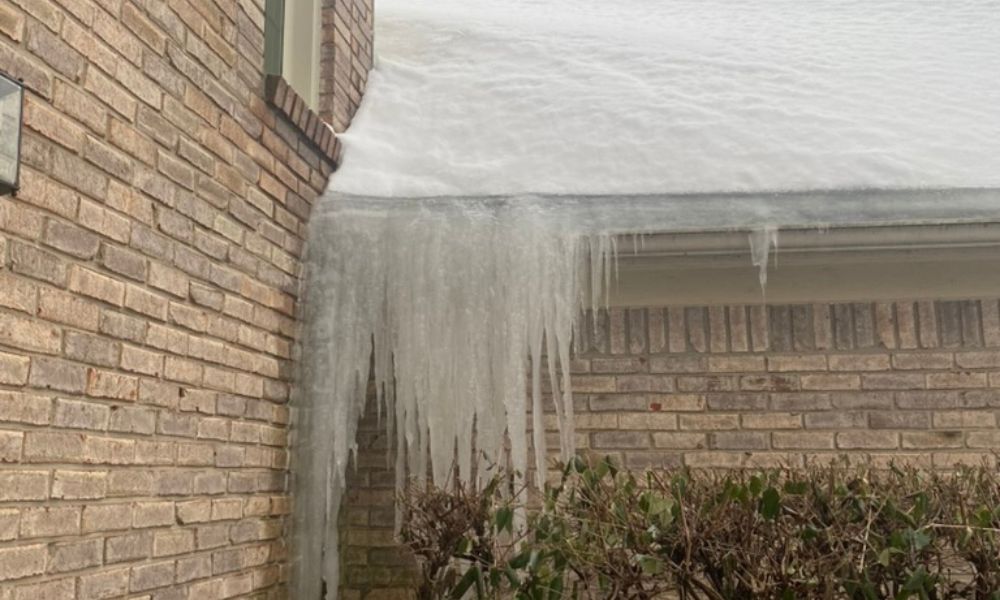
When the water reaches the cold, unheated eaves of the roof (the part that extends past the house), it refreezes, forming a barrier of ice—the ice dam.
The Leak
The dam traps new water behind it. This trapped water has nowhere to go but up, backing up under your shingles. Once it gets past the shingles, it seeps into your attic, walls, and ceilings, causing catastrophic water damage.
The weight of the ice can damage gutters and fascia boards, while the trapped water can lead to rotten wood, stained ceilings, and even dangerous mold growth.
Prevention is the Best Medicine
The key to winning the battle against winter is to stop the problem before it starts. For a Michigan winter, this means taking a comprehensive approach that goes beyond simply raking snow off your roof.
1. Start with the Gutters
Before the first snow falls, it's critical to ensure your gutters are completely clear of leaves, twigs, and other debris. A clogged gutter can’t drain melting water, which makes it a prime location for an ice dam to form.
For a long-term solution, consider gutter guards. These systems prevent debris from entering your gutters while allowing water to flow freely. This not only reduces the risk of ice dams but also protects your home's siding and foundation from water overflow all year round.
2. Address the Heat Source
The most effective way to prevent ice dams is to keep the entire roof surface at a consistent temperature—ideally, the same temperature as the outside air.
Insulation & Ventilation
Ensure your attic is properly insulated and ventilated. Adequate insulation acts as a barrier, keeping warm air in your home and out of your attic. Proper ventilation, using a system of soffit and ridge vents, allows cold outdoor air to circulate through the attic, flushing out any heat that does escape.
Chimney Waterproofing
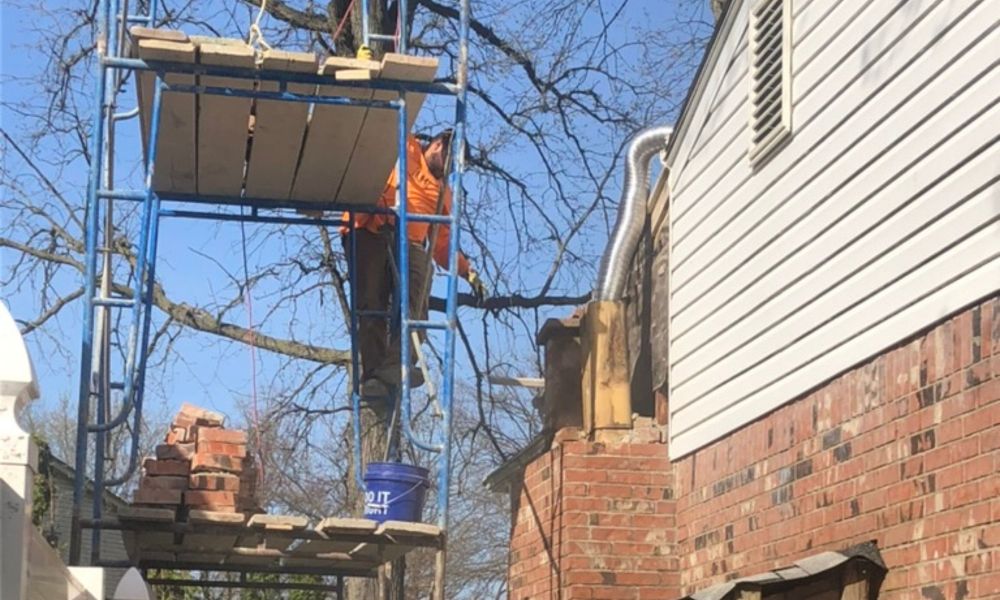
Your chimney is a major point of heat loss and water infiltration. Over time, the constant freeze-thaw cycles can cause masonry to crack and deteriorate. Water can seep into the brick and mortar, freeze, expand, and lead to significant damage. A professional can inspect and perform chimney waterproofing and tuckpointing to seal the masonry, preventing this damaging cycle and protecting your chimney's structural integrity.
3. Know When to Call a Professional
Sometimes, the damage is already done. If you see icicles forming along the eaves of your roof, or worse, notice water stains on your ceilings, it's time to act fast. While it may be tempting to grab a ladder and chip away at the ice, this is incredibly dangerous and can cause severe damage to your roofing materials.
A qualified professional has the tools and experience to safely remove an ice dam using high-temperature steam, which melts the ice without damaging your shingles. They can also assess the underlying cause and perform necessary roof leak repairs to prevent future issues. This is especially important for commercial properties where a small leak can turn into a massive business disruption.
Serving Our Downriver Neighbors
At Above All Masonry & Construction, LLC., we are proud to be a local company serving local residents and business owners in the Downriver area. We understand the specific needs of Downriver homeowners because we are your neighbors.
We pride ourselves on “Fast! Affordable! Reliable!” service, and we are committed to protecting our clients’ investment with guaranteed products. Whether you need a chimney cleaning, gutter guards, or a new roof to prepare for winter, we're here to help.
Contact us today to ensure your home or business stays safe all winter long.
Key Takeaways
Michigan's freeze-thaw cycles are the primary cause of ice dams and water damage.
Ice dams form when warm air from your home melts snow on the roof, which then refreezes at the colder eaves.
Clogged gutters are a major contributor to ice dams; cleaning them or installing gutter guards is a critical preventative step.
Proper insulation and ventilation in your attic are the most effective long-term solutions for preventing ice dams.
Chimney waterproofing protects your masonry from the damaging effects of constant freezing and thawing.
If you have a leak, call a professional for safe and effective roof leak repairs.
Downriver homeowners and commercial property owners can rely on local experts who understand the region's specific climate challenges.